
70 kVThe heart of it
The music comes from the lightning.
Every arc heats the air in an instant – a tiny clap of thunder. Many arcs per second make a tone.
- 1
One arc = one bang
The discharge heats the air within microseconds. The air expands: a pressure wave – and that is sound.
- 2
Many arcs = a note
If the coil fires 440 times per second, you hear 440 bangs per second – concert A (440 Hz).
- 3
The melody controls the arcs
A controller translates the music into pulses: how often the coil fires sets the pitch. How long each pulse lasts sets the loudness.
Try it yourself
Sound starts only when you tap. Volume is limited. iPhone: if you hear nothing, check the silent switch on the side.
The animation is slowed down a lot – real arcs are far too fast for the eye.
Play a few notes · Every key is an arc rate – slider and keys play coil 1.
Public-domain works arranged in two voices for the two coils – synthesised here in the browser: voice 1 plays the left coil, voice 2 the right. Arc length follows loudness.
Why a spark can be a note
Your ear receives the same thing both times: 440 pressure pulses a second. That is the note A. The coil only changes how often it sparks – and with it the pitch.
Real footage: the coils play
Real recordings, no loudspeaker. Sound only after you tap.
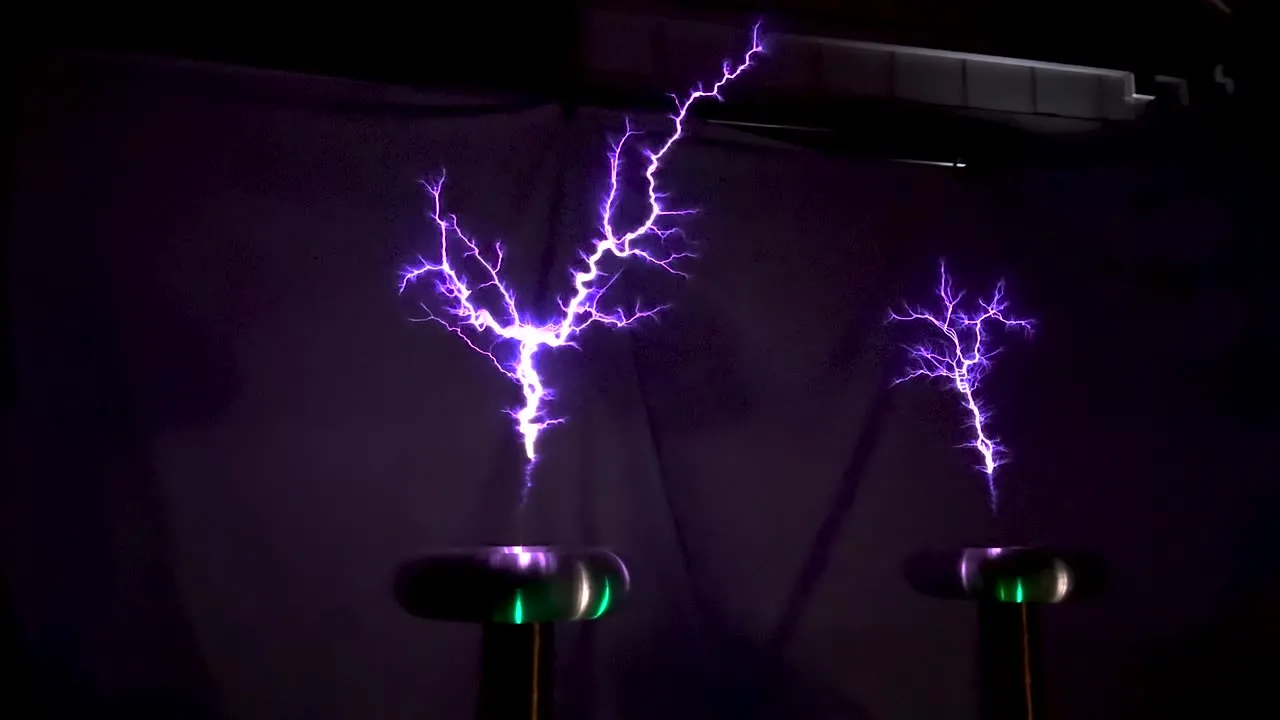
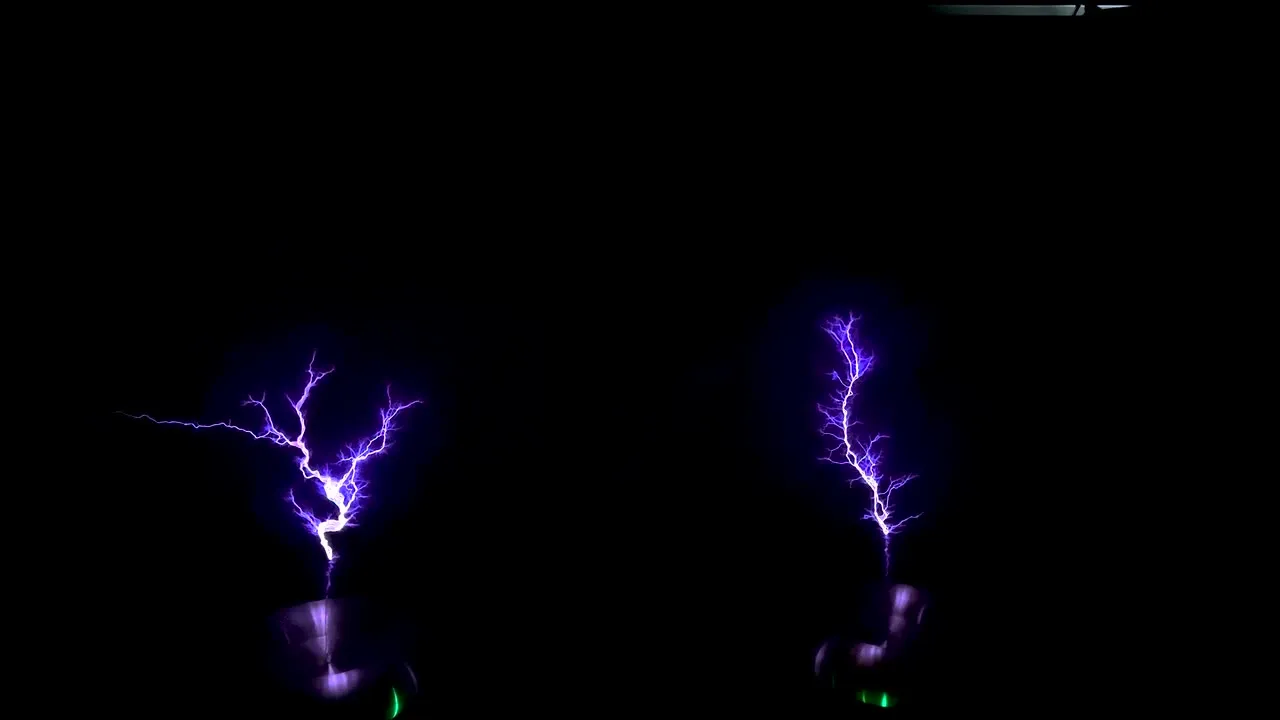
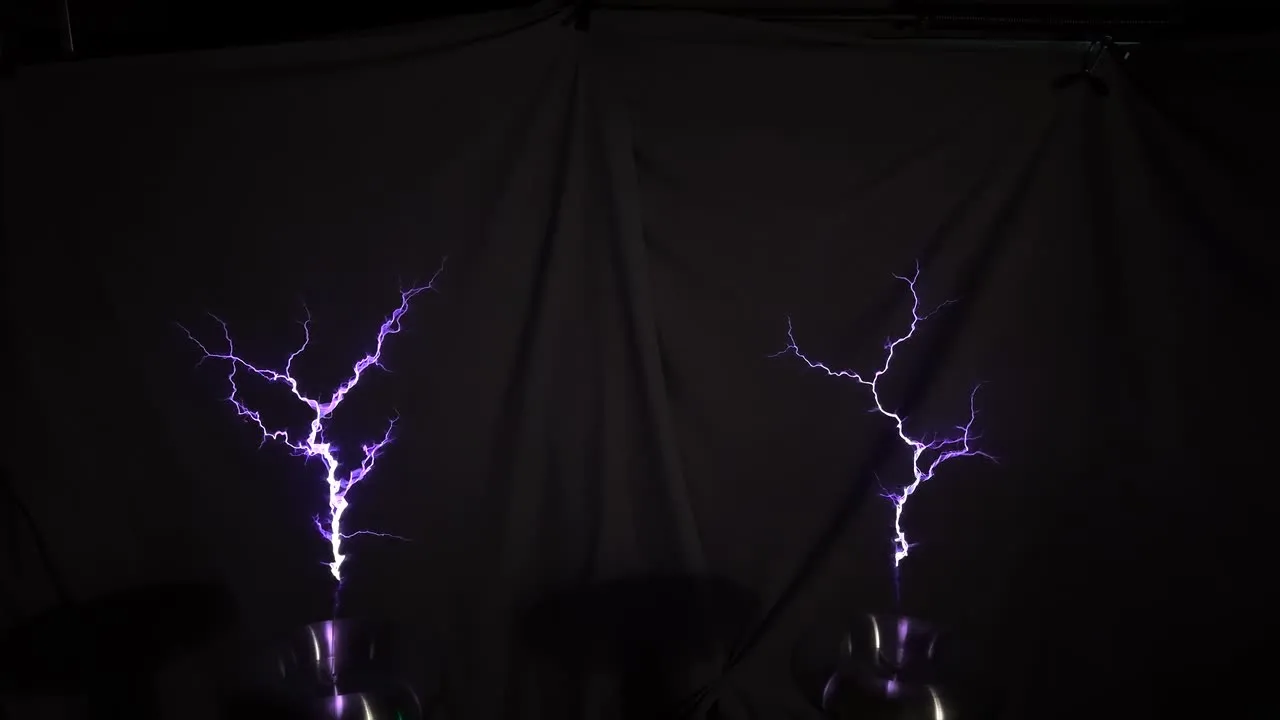
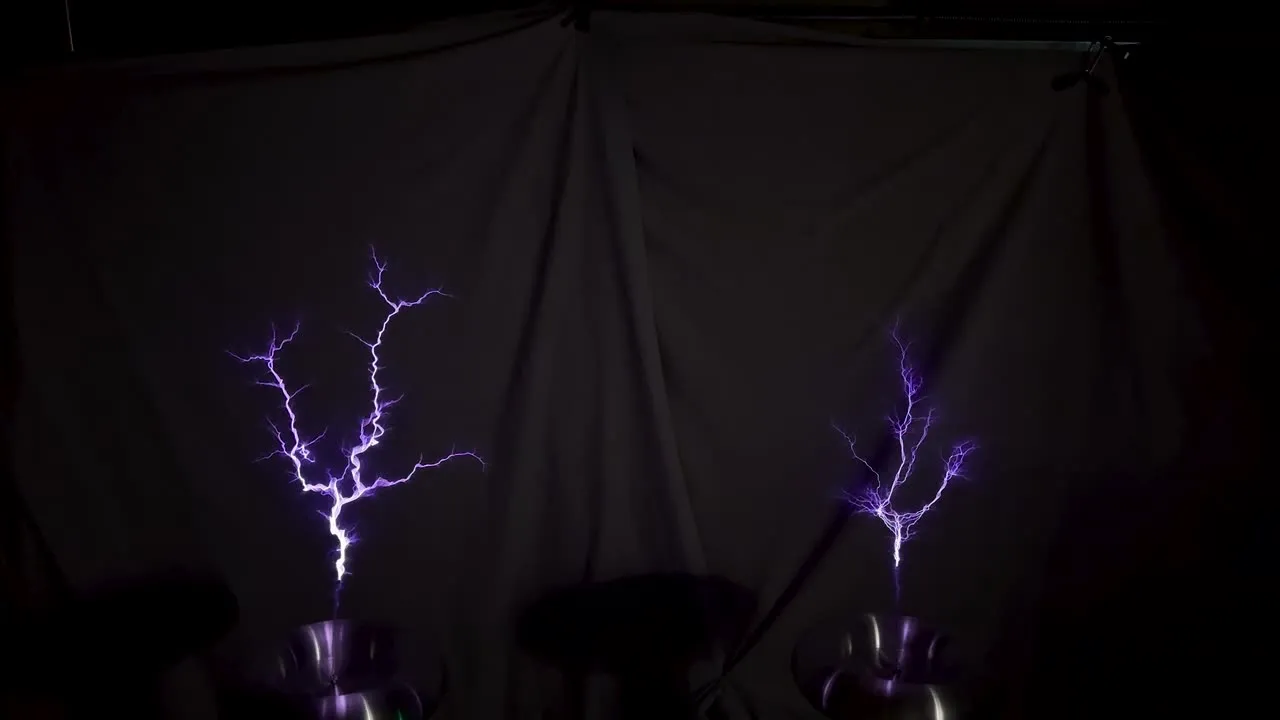
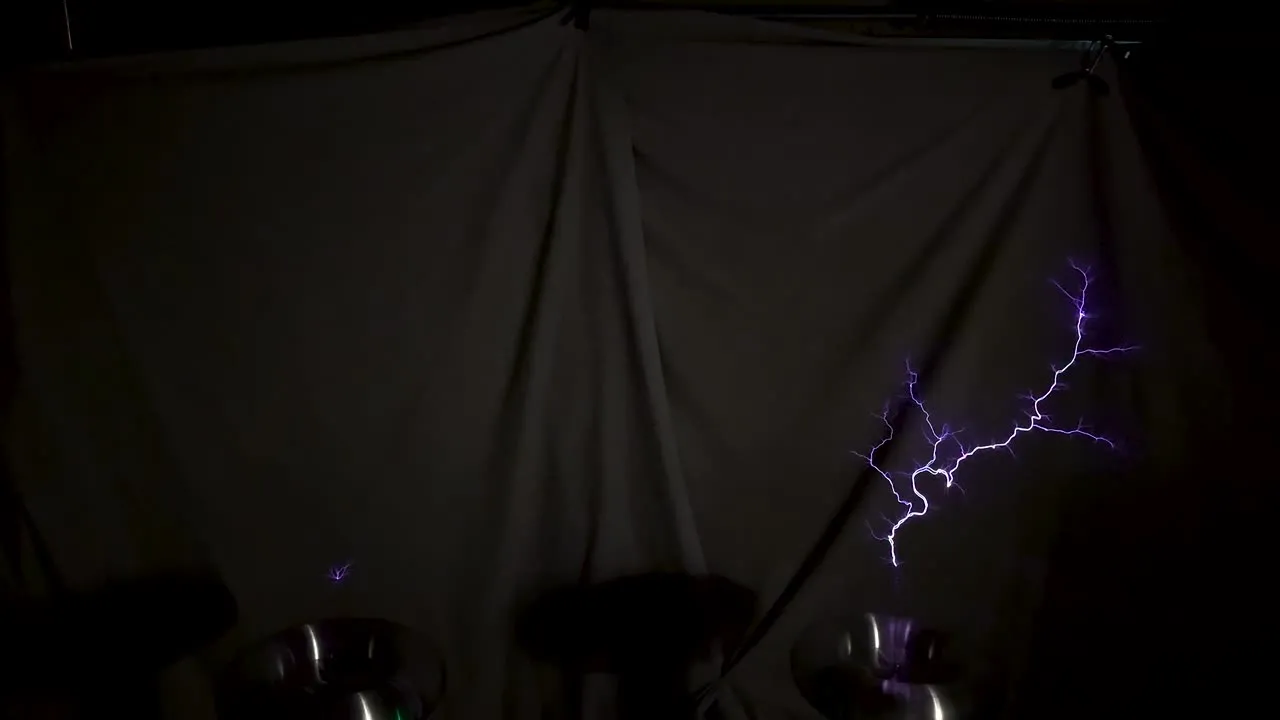
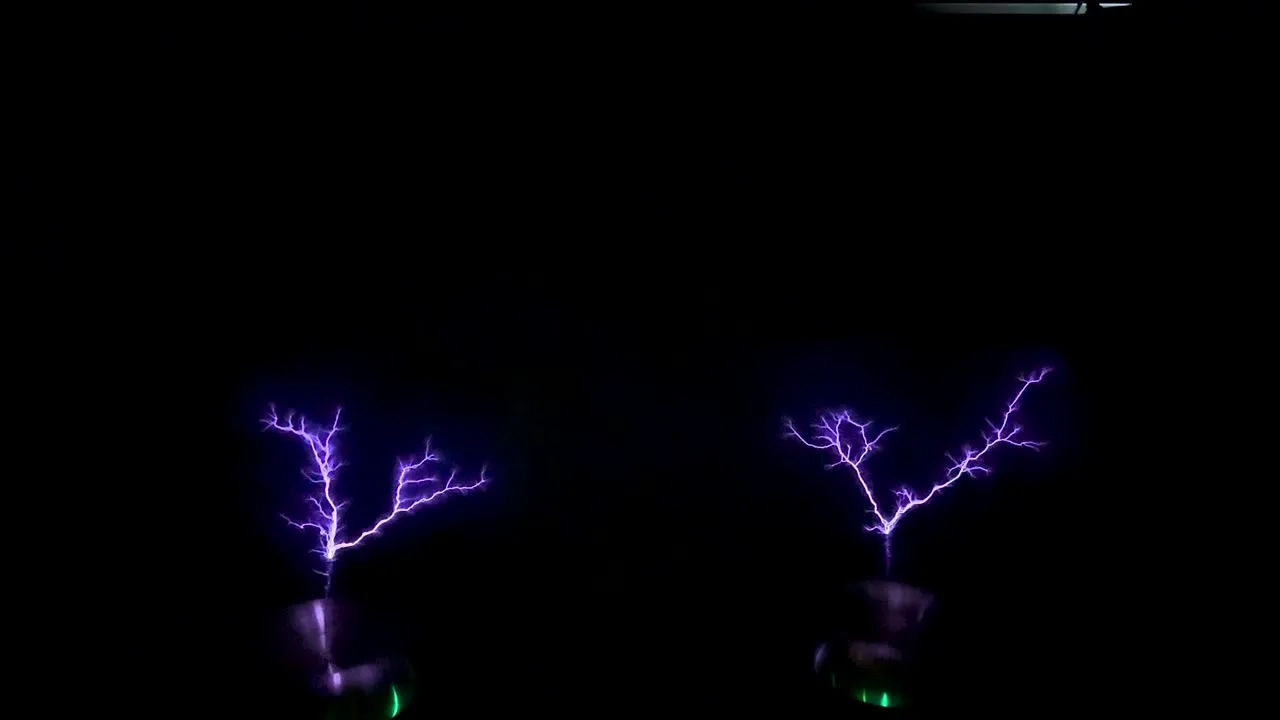
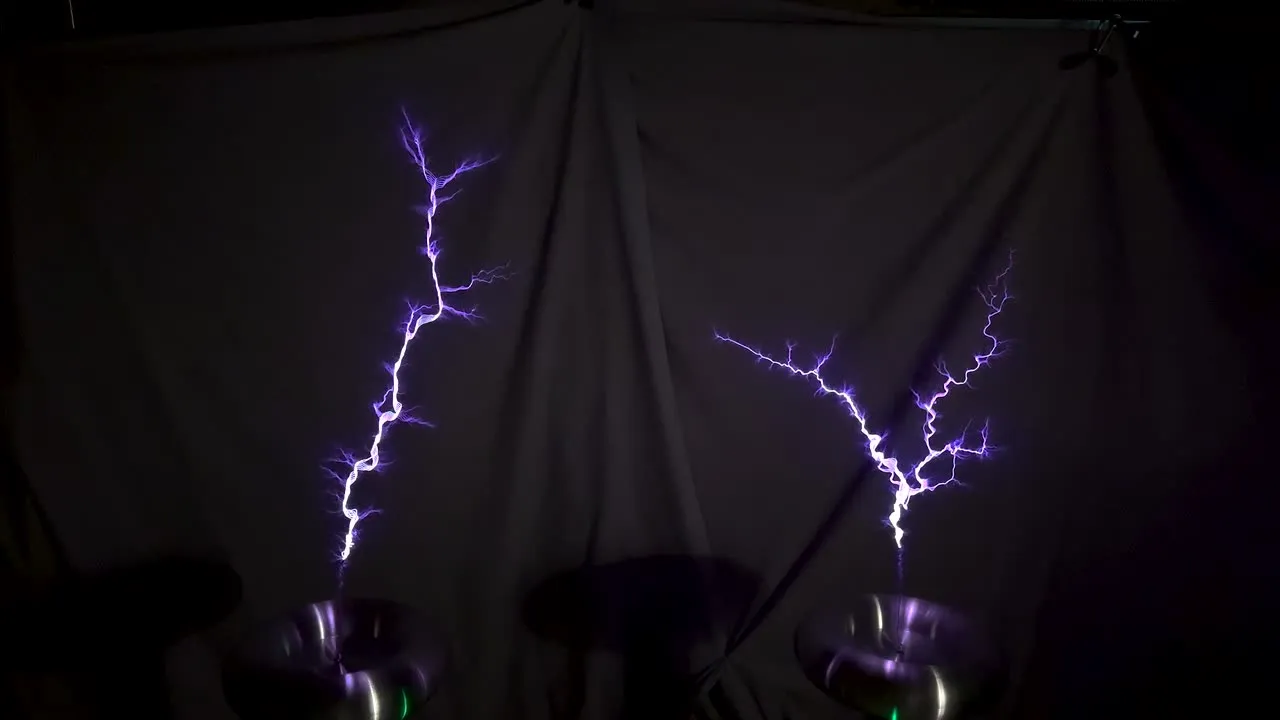
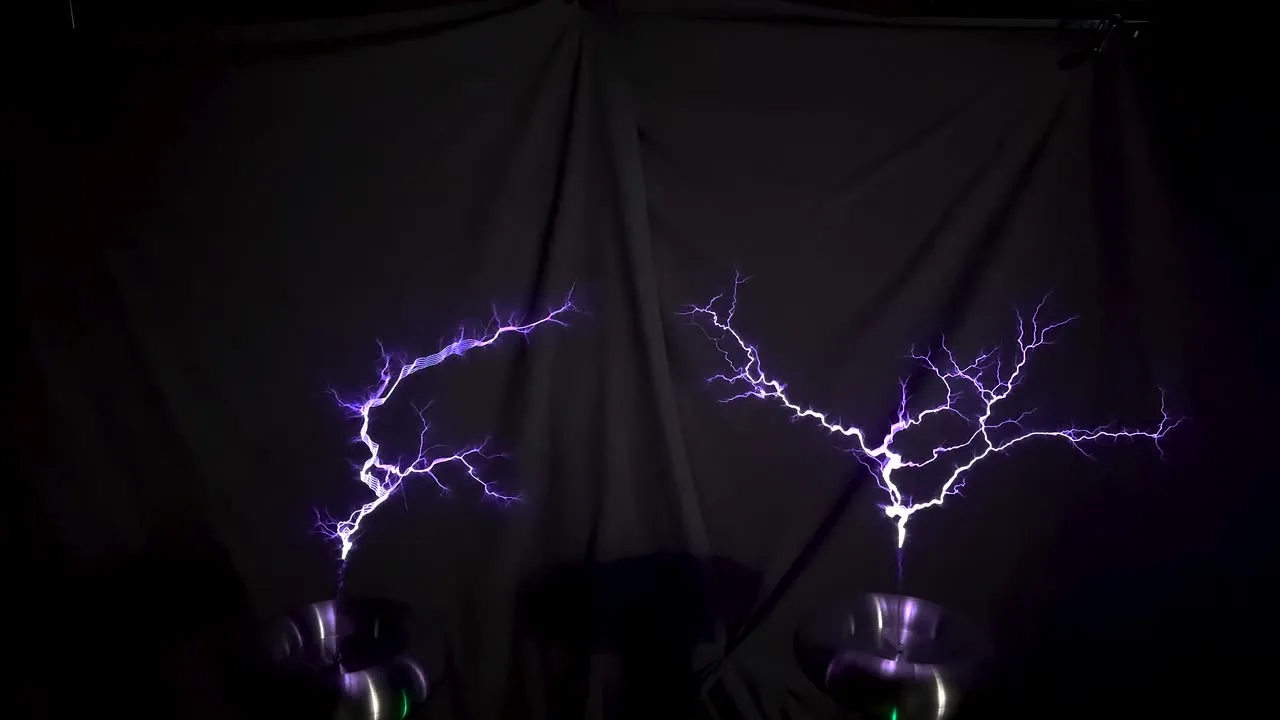
Description of the videos
The video shows real lightning with rapidly changing light and loud bangs. Transcript: Two Tesla coils against a dark background. Violet arcs flash from the toroids and crackle in time with the melody. No speech.
160 kVFor the curious
Two DRSSTCs, hand-built.
Two tuned resonant circuits, switched by semiconductors – so precise that the arcs fire in time with the notes.
Where does the high voltage come from?
A Tesla coil is a resonant transformer. Primary and secondary circuits are tuned to the same frequency of around 130 kHz – the voltage reverses direction more than 100,000 times per second and builds up to around 200,000 volts. At the toroid on top it discharges into the air as an arc.
What is actually switching?
An IGBT half-bridge module (300 A continuous, briefly close to 1 kA) with a gate driver that switches at the current zero crossing and shuts down on overcurrent. The driver is an adapted version of a widely used open-hardware design.
How does the music get in?
An interrupter translates MIDI notes into light pulses that travel by optical fibre – galvanically isolated – to the driver. Pulse rate 20 to 20,000 Hz (the audible range), pulse width typically 30 to 300 microseconds.
How do you measure 200,000 volts?
Not directly – ordinary instruments can’t do it. For the research I developed two methods: via the secondary current (giving around 190 to 200 kV, consistent with 1 m arcs) and via a capacitive probe at 3.5 m distance.
What safety measures are there?
Overcurrent shutdown, zero-crossing switching, limited pulse width, a safety zone between rig and audience, good earthing. I’m at the rig during every show. Details on the on-site requirements below.
All figures are taken from the peer-reviewed publication (DOI 10.7795/320.202209). doi.org/10.7795/320.202209 ↗
200 kVEnquiry
Light it up.
Date, place, occasion – that is all it takes to start. You get a personal reply.